ABOUT
Matt Chellew
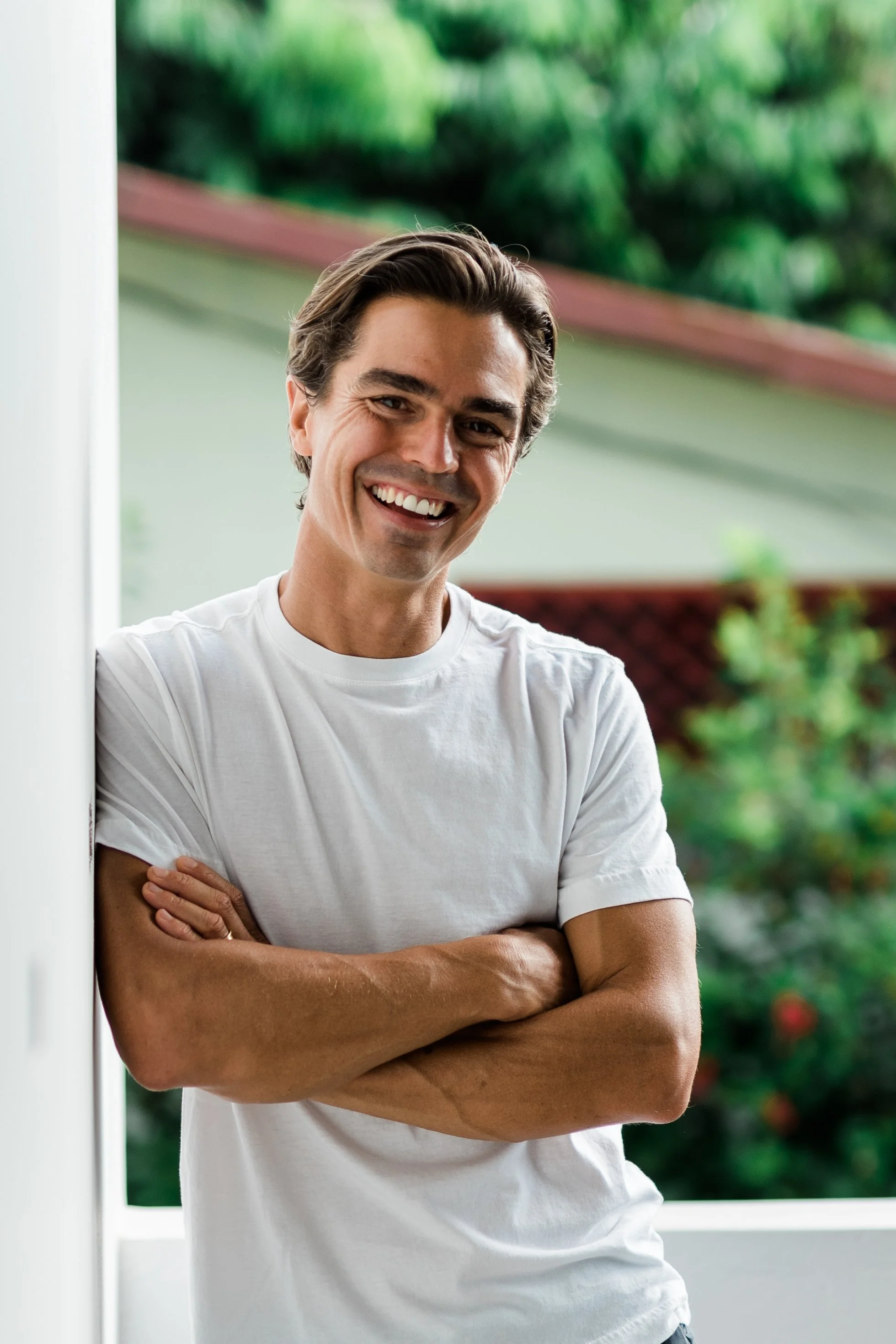
For over two decades, I've worked the floor of high-acuity, high-volume emergency departments in urban and rural Canada and the US — the fast-paced, high-stakes environments where the stress never fully lets go and the exposure to trauma is constant. That work taught me medicine. It also taught me something I didn't have language for at first: the visceral, cumulative cost of service under sustained stress, and the way secondary trauma lives in the body long after a shift ends.
That realization pulled me toward the science of the nervous system — toward understanding and experiencing regulation not as a soft skill, but as physiology. In 2019, I began training in Somatic Experiencing® — not yet knowing just how impactful the training, and the work in this fascinating field, would prove to be, both for me and for the people I was showing up for every day.
Then came 2020 and 2021. The pressure inside emergency medicine intensified in ways few of us were prepared for. And in the middle of it, I noticed something: the same stress that was breaking down so many of my colleagues wasn't landing on me the same way. My nervous system had been supported, trained, and brought into coherence — and that changed everything about how I could show up, keep serving, and stay whole in a setting that wasn't built to support people. I watched talented, well-meaning colleagues leave the profession — burning out, forced to choose something else because they simply couldn't go on.
I realized then that with these tools, people didn't have to reach their wits' end. This work — offered to people in healthcare, and now beyond it, to anyone in high-stress situations — meant they didn't have to reach the point of being burned out, incapable of doing the important work they once loved. They could continue this work, or choose something different, with authenticity, with coherence and regulation.
That's the work I do now. I partner with individuals and teams in the highest-stress professions — physicians, nurses, and paramedics; law enforcement and first responders; teachers, social workers, and counselors; corporate executives and high performers.
What I teach isn't coping. What I remind people of is something we all have: the capacity — and the sovereignty — to live with resilient nervous systems. I empower people with tools that build the physiological capacity to process and thrive, rather than simply manage. Because resilience isn't a mindset. It's physiology. And when your nervous system is regulated and coherent, everything downstream of it changes.